The 4500 MkIII is AMETEK Land’s class-leading opacity monitor, used to measure emissions of dust and other particles in combustion processes. It has a very flexible design which allows it to be configured to match the customer’s needs and budget. One of the most useful accessories is the fail-safe shutter which isolates the transmissometer from the process gases.
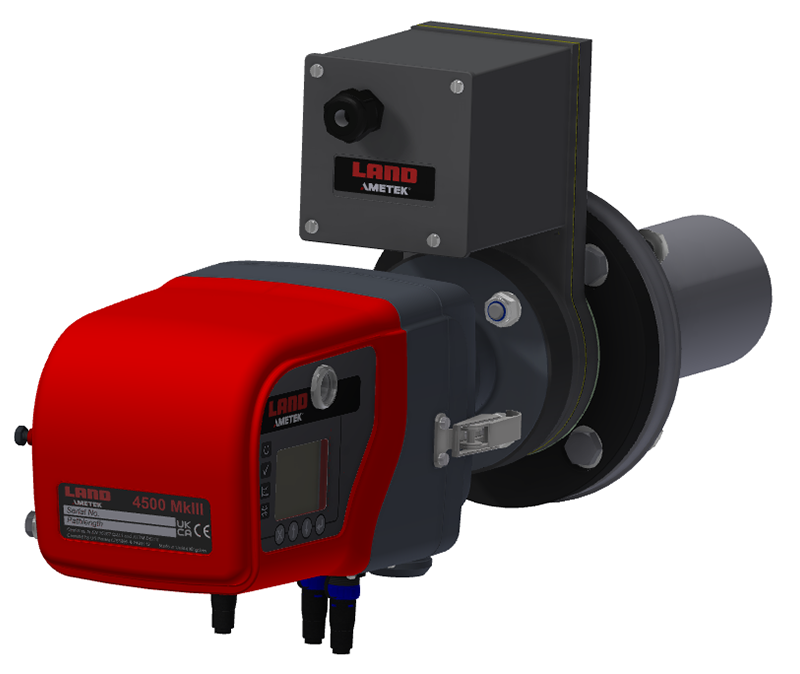
It performs two principal functions. Firstly, it protects the instrument from damage if the purge blower fails to provide an adequate flow of clean, filtered air to keep the optics clean. Secondly, it protects both the instrument and the operator from exposure to stack gases when it is swung open for a calibration audit or other maintenance.
The shutters are opened by an electric motor, and they are held open by an electromagnetic clutch. A spring mechanism pulls the shutter closed immediately if power is removed. Because they will only stay open for as long as power is applied, they are fail-safe in that they return to a safe condition in the event of power failure. They are generally controlled from the AFU-APS-I/O, which also includes an input for the purge flow sensor and closes them if it senses a purge failure.
The design includes some additional features to maximize reliability and effectiveness. The shutters close every time the
4500 MkIII performs its daily calibration check, to reduce the likelihood that it will become stuck in the open position.
The shutter position is detected by a pair of microswitches: one indicates that it is fully open, the other indicates that it is fully closed. The AFU electronics measure the status of these switches, and show a fault condition if the shutter fails to close during the calibration check, or if it does not return to the correct position afterwards.
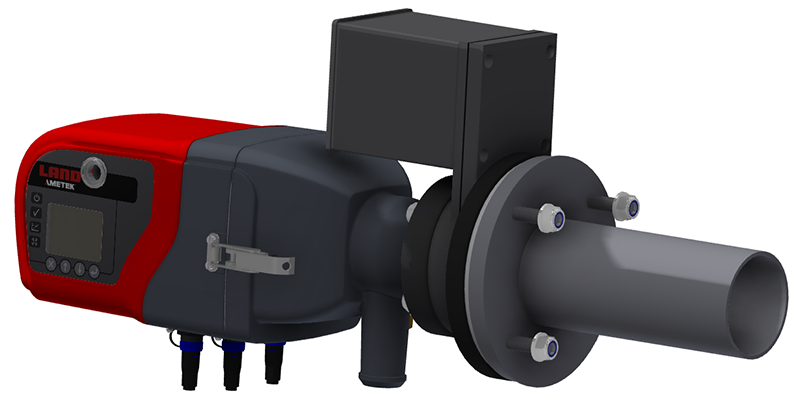
To address the question of when shutters are needed, we need to consider the consequences of a loss of purge air and what happens when the instrument is opened for maintenance. On a negative-pressure stack, where the barometric pressure inside the process is lower than the surrounding atmosphere, the pressure differential will draw ambient air into the stack, so it is unlikely that the instrument will sustain immediate damage. If the stack pressure is positive relative to the surrounding atmosphere, loss of purge air will allow flue cases to escape through the purge body.
The hot, corrosive gases will quickly damage the metalwork and contaminate the optics, so shutters are needed because they immediately isolate the instrument from the stack. A similar thing happens when the instrument is swung open for a calibration audit: flue gases escape and contaminate the purge filters. Since flue gases are hot and typically contain toxic species such as SO
2 and NOx, they also pose a danger to the technician carrying out the audit.
Therefore, we can conclude that fail-safe shutters give useful protection on negative-pressure processes, but they are essential for both instrument protection and personnel safety whenever a
4500 MkIII is installed on a positive-pressure duct.
A final note of caution: the fail-safe shutters are very effective in protecting the transmissometer, but they will themselves sustain damage if they are exposed to flue gases for an extended time. If an effective purge cannot be restored within a few days and the flue remains operational, the entire instrument, including shutters, must be removed from the stack to prevent damage to the shutters.