Heat treatment involves heating or cooling solid materials, mainly steel, to specific temperatures for set times to achieve desired properties like improved machinability, hardening, and stress management.
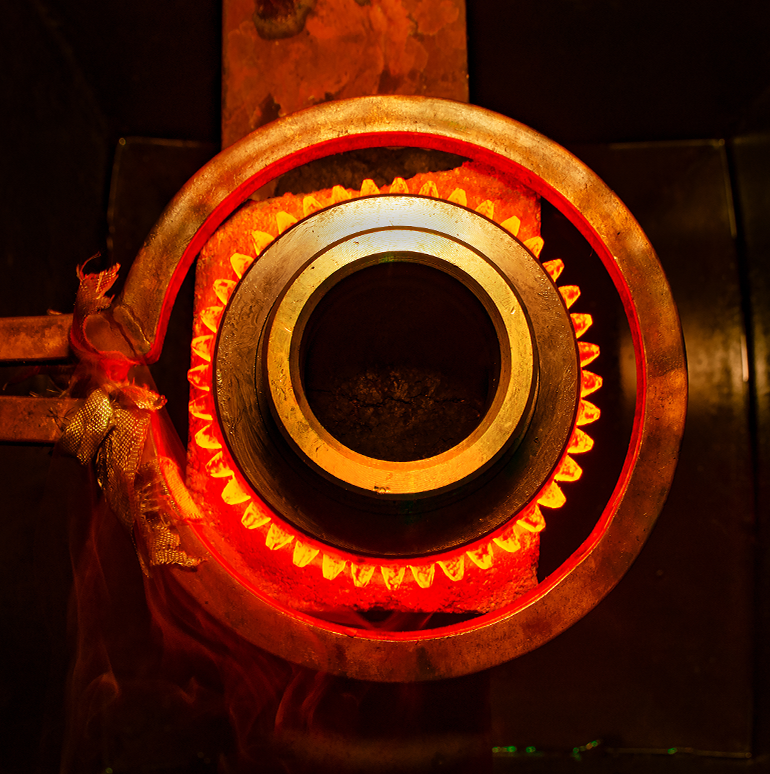
Precise temperature measurement and control are crucial for maintaining high quality and documenting the process, especially for safety-critical components in aerospace, automotive, and medical industries.
Depending on the desired heat treatment process, non-contact temperature measurement is essential for accurate process control, monitoring and data capture.
Different temperature profiles are used depending on the metal being treated and the desired result. In ferrous alloys, annealing involves heating the metal beyond a critical temperature and then allowing it to cool slowly. It is often used to remove the hardness that results from cold working. Annealing temperatures are usually high, in the region of 1000 °C and so a short-wavelength pyrometer such as
SPOT+ M100 or M160 is ideal.
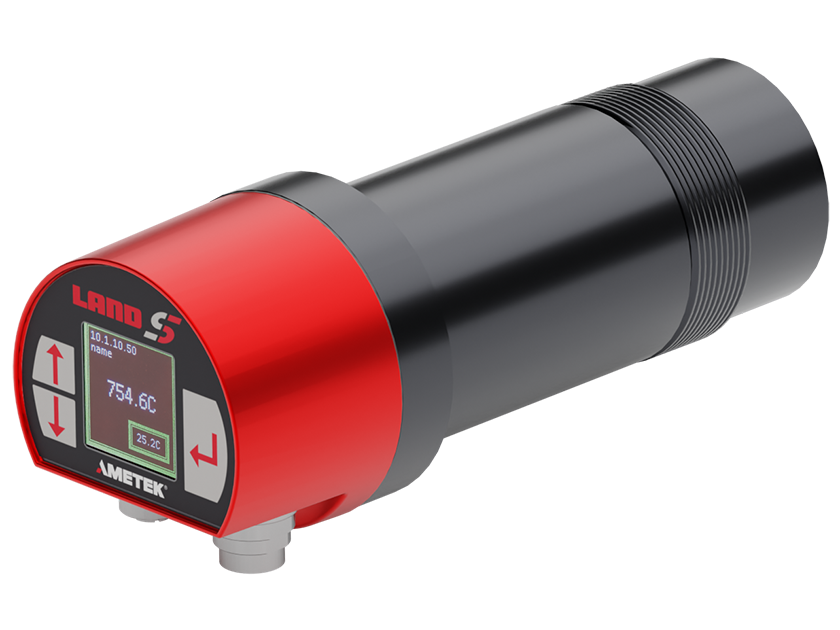
Reflections from the hot furnace walls often cause problems in these applications, so every
SPOT+ pyrometer includes a background temperature input which allows it to calculate the true temperature of the object being measured.
Martensitic steel is a very hard material but is too brittle for most applications. Tempering at a temperature between 200 °C and 500 °C toughens the steel so it can be used for tools and springs. Because it is a lower-temperature process, the new
SPOT+ M3-5 is ideal as it has a measurement range from 0 to 500 °C.
Click here to learn more about our solutions for Heat Treatment Applications