Slightly provocative title, I admit, but I have noticed an increase in the number of requests recently to replace skin thermocouples on high-temperature fired heaters with alternative technology. This has obviously given us the opportunity to talk about the virtues (and challenges of) both single-point fixed pyrometers and fixed thermal imaging systems.
T
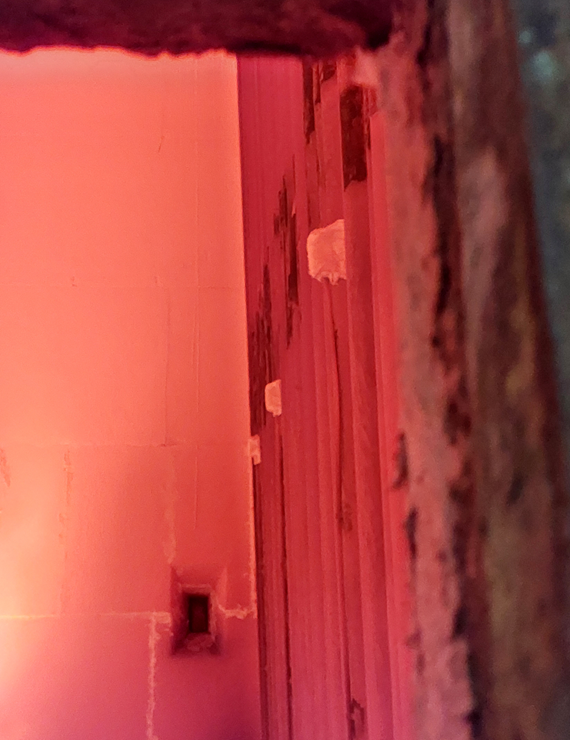
he complaints about skin thermocouples generally relate to reliability or concerns over the loss of close contact with the tube skin surface over time which means the true tube temperature is unknown because the sensor begins to read flue gas temperature.
During these discussions, we’ve learnt about the impact of this uncertainty, which in some cases means reducing loads but in others has resulted in significant planned downtime. In some ways, this uncertainty is worse than an outright failure. At least with a failure you know whether to continue running using the remaining sensors or use portable pyrometers, for example, periodically, before the sensor can be replaced. When engineers don’t know whether the value is true or not, they can spend a huge amount of time and resources investigating the issue due to the possibility that the value is real. Often, when thermocouples do detach from the tube surface, they read high - flue gases are generally hotter than metal surface temperatures – so high-temperature warnings/alarms are triggered that should not simply be dismissed.
Limitations of Skin Thermocouples
The two main limitations encountered by thermocouples when measuring process tube temperatures in petrochemical furnaces are:
Harsh Environment
The high temperatures and often aggressive chemical nature of petrochemical furnace flue gases pose a challenge for skin thermocouples. Only a limited number of thermocouple types can withstand the corrosive effects of reducing atmospheres. Contamination of thermocouple elements occurs frequently, leading to changes in their Seebeck coefficient, drift, and inaccurate readings. So, their lifespan is significantly reduced in such harsh environments.
Challenges in Achieving Reliable Thermal Contact
Obtaining optimal thermal contact between the thermocouple and process tubes becomes difficult due to the high fluxes present in petrochemical furnaces. These high fluxes introduce errors in temperature measurements, resulting in the uncertainty mentioned. In order to improve the reliability, some customers have insulated the area around the thermocouple tip, which could have the adverse consequence of creating an artificially cool spot on the tube that is not heated by the radiative wall or flue gases.
Advantages of Infrared Technology
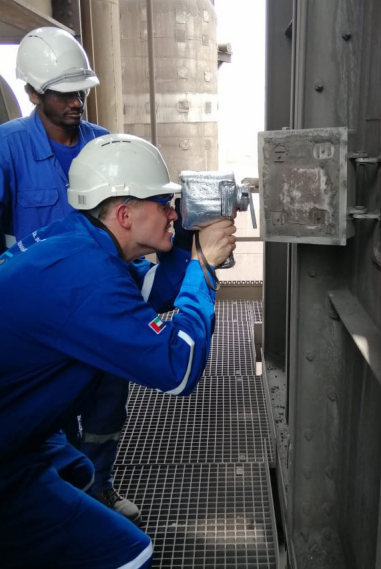
We’re careful not to present thermal imaging and/or infrared pyrometry as a silver bullet to tube metal measurement issues – this is a challenging application for any technology. But we do feel that on balance, the benefits of being able to install a cooled instrument outside the harsh environment, not susceptible to drift over time, outweigh some of the challenges we face that including variable tube emissivities and identifying view factors that determine how background correction should be weighted (something that we’ve built a wealth of experience with).
This Peter Saunders’ line in Radiation Thermometry,
“Thermal contact is guaranteed through the process of radiation exchange” because it makes the maybe counter intuitive point that a non-contact pyrometer, sitting outside the furnace, does have a measurable physical connection to the tube where there is a line of site. Thermal imaging cameras offer the added advantage of providing insights into temperature distribution in a furnace and between process tubes from a single device.
Flexibility and Integration
Over time, infrared instruments have become more than like-for-like replacements for thermocouples, although they can be just that if that’s all that is required. Our smart instruments include a range of features and digital communication options designed for seamless integration with existing control systems, that has accelerated their adoption. I often joke that using an advanced pyrometer or thermal imager just to measure a single temperature in real-time is like only using your smart phone for phone calls.
So, as the challenges with skin thermocouples persist, I expect interest in infrared and non-contact technology generally to increase and our challenge will be to keep up with industry’s growing demand for more solutions to the huge number of furnace temperatures and geometries and wider variety in fuel types.