Rotary kilns sit at the heart of many high-temperature industrial processes, including cement and lime production, iron ore pelletisation, waste incineration, as well as battery recycling, pyrolysis, deactivation and calcination of spent lithium-ion batteries.
These rotating cylinders operate under demanding conditions, continuously processing material as it moves from the feed end to the burner.
Material enters at the colder end of the kiln and travels through the rotating tube towards the burner, guided by gravity and motion. At the hot end, it is discharged for further handling. Throughout this process, maintaining the integrity of the kiln lining is essential for safe and efficient operation.
Figure 1 shows thermal images captured from inside rotary kilns using LAND’s MWIR-b and NIR-b thermal imaging borescopes
 Figure 1
Why continuous monitoring matters
The refractory lining inside a rotary kiln is constantly exposed to mechanical stress, high temperatures, and gradual wear. Over time, this can lead to erosion, cracking, or displacement of the lining materials.
The rotation of the kiln itself introduces additional strain. Bending and torsion of the shell can damage refractory bricks, increasing the risk of hot spots or, in severe cases, structural failure. Repairs may involve patching or pouring new lining, while more extensive wear requires planned shutdowns and replacement.
Detecting these issues early makes a measurable difference. It reduces unplanned downtime, lowers maintenance costs, improves energy efficiency, and supports safer working conditions.
Beyond the kiln, in recycling processes such as pyrolysis and the deactivation or calcination of spent lithium-ion batteries, it is equally important that the thermal process is continuously monitored and temperatures are kept under control.
Identifying outer shell hot spots early
Traditional contact measurement methods, such as thermocouples, are not practical for a rotating structure. Similarly, single-point pyrometers are limited, as they cannot provide a complete picture of the kiln surface.
Instead, full-area temperature monitoring is required. By continuously tracking the entire shell, operators can identify abnormal temperature patterns and respond before problems escalate.
Because the kiln rotates continuously, infrared linescanners and thermal imaging systems are well suited to this task, delivering reliable 24/7 monitoring.
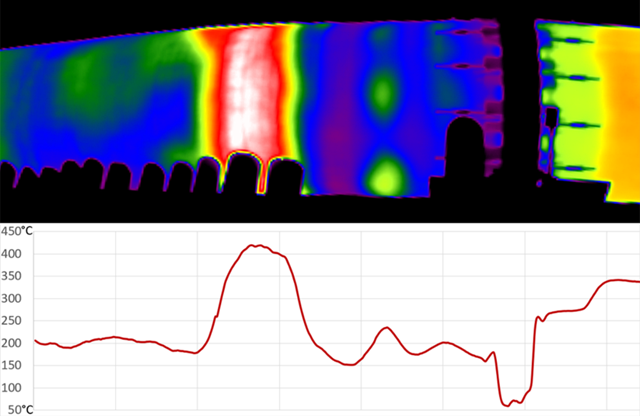
Figure 2
Infrared linescanners for full shell visibility
Infrared linescanners provide a proven method for monitoring rotary kiln shell temperatures. LAND’s LSP-HD linescanners are widely used across industries to generate detailed thermal maps of the kiln surface.
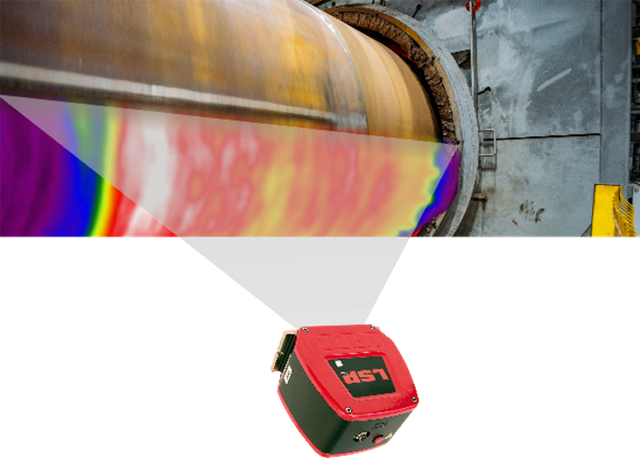
Figure 3
Installed with a wide scan angle, these scanners capture up to 1,000 measurement points along a line at high speed, building a complete thermal profile as the kiln rotates. This allows operators to quickly identify temperature deviations and emerging hot spots.
For longer kilns, multiple scanners can be combined to ensure full coverage
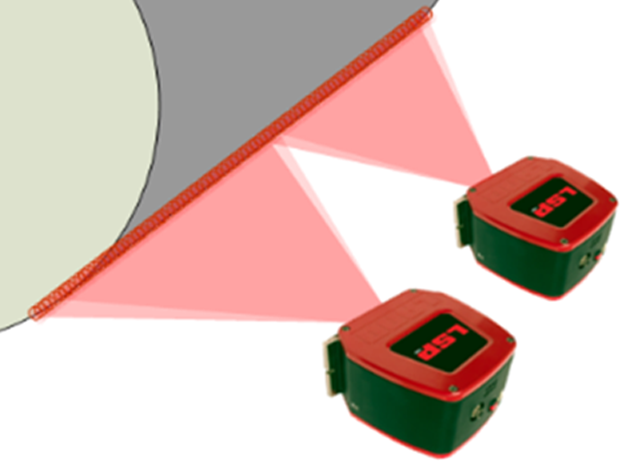
Figure 4
The data from each scanner is then brought together through LAND’s Landscan software, providing a single, clear view of kiln performance.
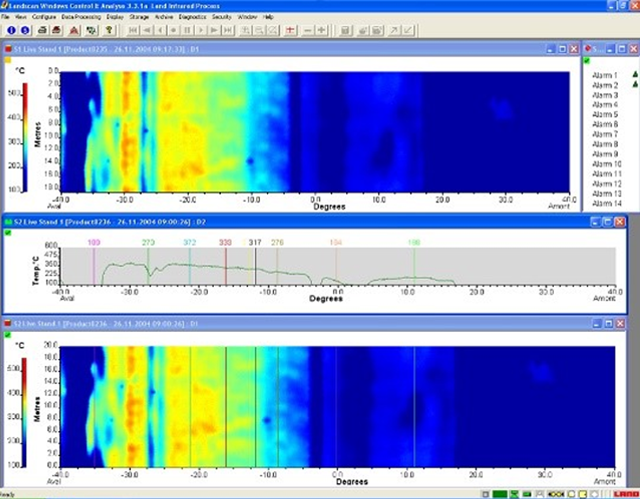
Figure 5
These systems can also incorporate additional measurements such as tire slip monitoring.
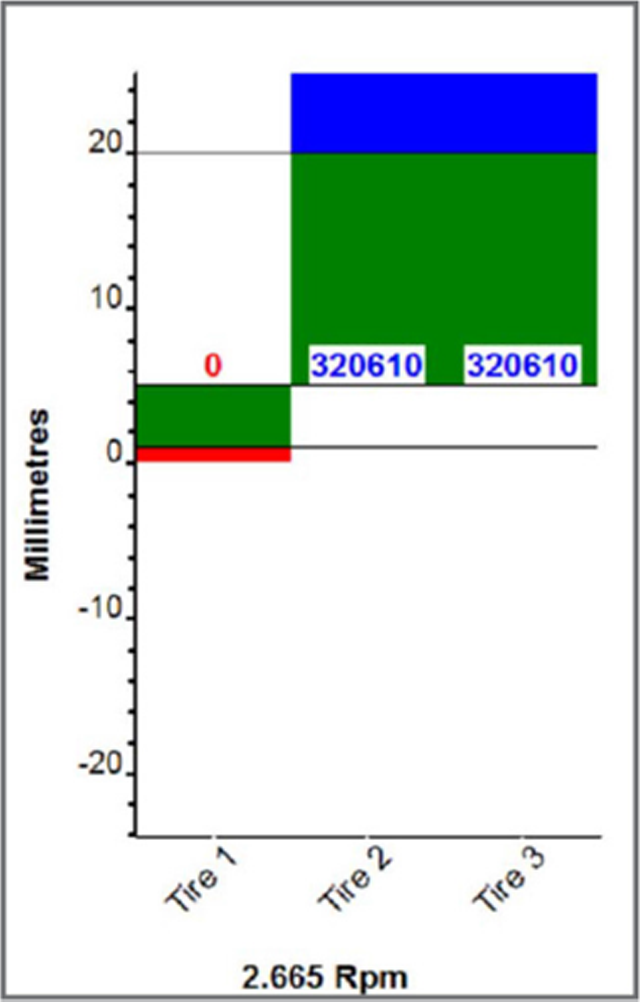
Figure 6
By tracking tire movement alongside temperature data, operators gain further insight into kiln condition, helping reduce the risk of refractory damage.
It is also possible in some cases to estimate refractory thickness from external temperature measurements. However, this depends on several variables, including emissivity, heat transfer behaviour, and internal process conditions, so results must be interpreted with care.
Taking monitoring further with thermal imaging
While linescanners provide excellent coverage, thermal imaging systems offer another level of detail and flexibility.
 Figure 7
Using industrial thermal imaging systems, operators can monitor kiln performance continuously with high-resolution data. Each camera provides hundreds of thousands of calibrated measurement points, enabling precise temperature analysis across the entire field of view.
These systems are designed for demanding industrial environments, with suitable housings and accessories for high temperatures, outdoor conditions, and even hazardous areas.
Multiple cameras can be integrated into a single system, allowing full kiln coverage. Real-time data is available across the plant, with configurable alarms to highlight developing issues before they become critical. Event-based recording can also capture temperature trends and video for further analysis.
Using temperature data to make better decisions
Continuous thermal monitoring gives operators the information they need to act early and confidently. By identifying hot spots and unusual temperature trends at an early stage, it becomes easier to plan maintenance, avoid unexpected shutdowns, and keep the process running efficiently.
For energy-intensive applications, this also contributes to lower fuel consumption and reduced emissions.
Monitoring and controlling the kiln process in this way improves efficiency while helping to reduce both energy usage and emissions.
Ultimately, effective kiln monitoring is about maintaining control. With the right measurement approach in place, operations remain safer, more stable, and more predictable.
If you would like to further explore how LAND can support your rotary kiln application, click here.