In glass manufacturing, some of the most serious problems begin long before they become visible.
A refractory issue rarely announces itself with a dramatic event. More often, it starts as a small area of deterioration hidden within the furnace structure. Day after day, that damage progresses. Heat escapes, energy consumption rises, operating costs increase and the risk to people, equipment and production continues to grow.
By the time a defect can be seen with the naked eye, the window to take simple corrective action may already have passed.
That is why early detection remains one of the most important aspects of furnace health management.
Effective furnace monitoring often requires visibility both inside and outside the furnace. Combining internal refractory monitoring with external shell temperature measurement, operators can identify developing issues earlier and make more informed maintenance decisions.
Why Furnace Problems Often Go Undetected
Glass furnaces are exposed to extreme temperatures and demanding process conditions throughout their operating life.
As refractories wear, crack or thin, several problems can follow. Heat loss increases, furnace efficiency suffers and fuel consumption rises. In more severe cases, damage can develop into a glass leak or breakout, creating a significant safety risk and potentially leading to extensive repairs and unplanned downtime.
Left unchecked, these hot spots can continue to develop, increasing the risk of a leak or breakout.
For plant operators, the challenge is not simply identifying damage. It is identifying it early enough to act.
Why Continuous Monitoring Matters
Many plants still rely on periodic inspections to assess furnace condition. While these inspections play an important role, they provide only a snapshot in time. Conditions can change long before the next inspection takes place.
Thermal imaging offers a different approach. Instead of occasional observations, operators gain a continuous view of furnace temperatures across entire areas of interest. Subtle temperature changes can be tracked over time, helping maintenance and production teams recognise developing problems before they become critical.
 LAND's LWIR-640 thermal imager is designed to provide continuous, real-time temperature measurement and hot spot detection across industrial processes, with thermal data available for monitoring, analysis and trending.
While external monitoring is essential, it only provides part of the picture. Internal thermal imaging can help operators identify developing hot spots and refractory wear within the furnace before those issues become visible on the outer shell. By combining information from both inside and outside the furnace, maintenance teams can gain earlier insight into refractory condition and potential areas of concern.
The value is not in seeing a hot spot once. The value comes from understanding how that hot spot changes over days, weeks or months.
That insight supports better maintenance decisions and helps plants address issues at the most appropriate time rather than reacting to an emergency.
Detecting Hot Spots Before a Breakout Occurs
One of the most effective ways to monitor refractory conditions is by observing the external surface temperatures of the furnace.
When refractory damage develops, it often creates localised increases in temperature. These areas may appear long before any visible signs of failure are present.
Looking Inside the Furnace
Monitoring the external shell temperature of a furnace is an effective way to identify developing refractory issues, but valuable information can also be gathered from inside the furnace itself.
 LAND's NIR-b-2K thermal imaging system provides a continuous view of the furnace interior, allowing operators to observe temperature patterns and identify localised hot spots that may indicate refractory wear or damage. Detecting these changes at an early stage can help maintenance teams investigate potential issues before they develop further.
When used alongside LWIR-640 monitoring of the furnace exterior, operators gain a more complete understanding of furnace condition. Internal monitoring helps identify potential problems at their source, while external monitoring provides confirmation of how those issues may be affecting the furnace structure over time.
Together, these technologies support earlier intervention, more effective maintenance planning and improved furnace reliability.
The LWIR-640 thermal imaging solution was developed to provide continuous monitoring of these critical zones. High-resolution thermal imagery allows operators to identify abnormal temperature patterns and investigate areas of concern while there is still time to respond.
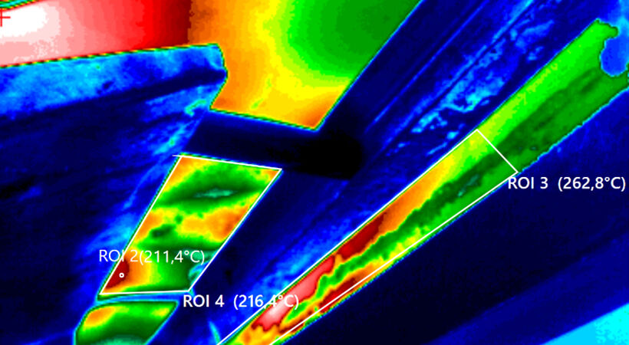
The system can provide full coverage of critical furnace areas and generate alarms when temperatures exceed predefined limits, giving operators an early warning of developing problems.
In practical terms, maintenance teams gain the time they need to investigate developing issues, plan corrective action and reduce the likelihood of an unplanned outage.
Safety and Efficiency Go Hand in Hand
Safety is always the primary concern when discussing furnace integrity.
A glass breakout can pose a serious threat to personnel and infrastructure. Early warning allows operators to take action before a situation escalates, reducing the likelihood of major incidents.
At the same time, there are clear operational benefits.
Every area of refractory deterioration represents energy that is no longer being used productively. Detecting these issues earlier helps reduce unnecessary heat loss, supports more efficient furnace operation and can contribute to lower operating costs. LAND's furnace shell monitoring technologies provide continuous thermal monitoring that supports energy efficiency, reduces waste heat and helps minimise emissions while improving furnace safety.
For an industry where energy remains one of the largest production costs, those benefits should not be overlooked.
Turning Thermal Data Into Better Decisions
Thermal imaging is often viewed as a safety tool, but its value extends much further.
Reliable temperature data provides a clearer understanding of furnace conditions over time. Long-term trends can help identify patterns of refractory wear, evaluate maintenance strategies and support decisions around repairs, rebuilds and operational planning. LAND's ImagePro software is designed to support this type of monitoring, analysis and long-term trending across thermal imaging installations.
The result is a more informed approach to furnace management, based on evidence rather than assumptions.
Protecting Furnace Life Through Early Detection
Refractory wear is inevitable in any glass furnace. The difference lies in how early developing problems are detected and how effectively they are addressed.
A clearer view of furnace conditions, both inside and outside the furnace, gives glass manufacturers the opportunity to detect issues earlier, plan maintenance more effectively and reduce the risks associated with refractory failure.
When operators have visibility of conditions inside and around the furnace, they are in a far stronger position to protect production and people.
In an environment where safety, efficiency and reliability all matter, seeing the warning signs early can make all the difference.
Speak to a LAND specialist to discuss thermal imaging technologies for your facility.